
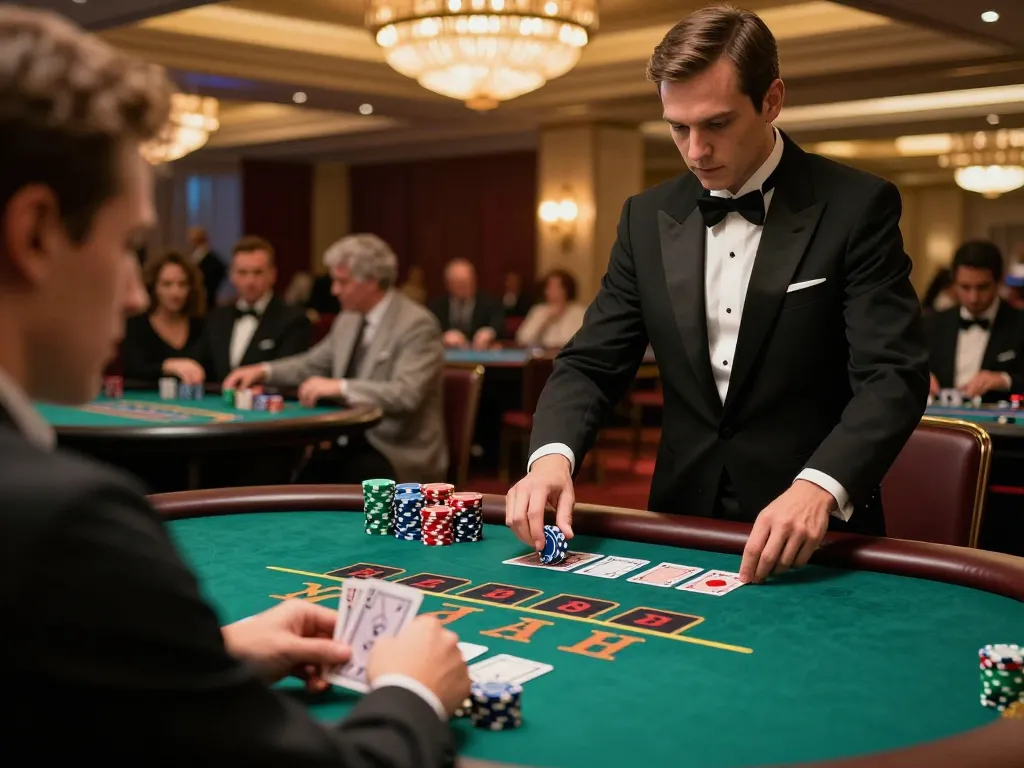
Understanding the Basics of Blackjack
Blackjack, often heralded as one of the most popular casino games worldwide, captivates players with its blend of strategy, psychology, and luck. The game’s objective is simple: get closer to 21 than the dealer without exceeding that sum. The elegance of blackjack lies in its simplicity and the depth of strategy that can be employed. For both newbies and seasoned players, comprehending the fundamental mechanics is vital for making informed decisions at the tables. When exploring options, MB66 provides comprehensive insights into this captivating game.
What is Blackjack?
Blackjack, also known as 21, is a card game that pits players against the dealer rather than against each other. Each player aims to accumulate a hand value closer to 21 than the dealer’s hand while avoiding exceeding 21 (busting). The game is traditionally played with one or more standard decks of 52 cards. In blackjack, cards 2 through 10 are valued at their face value, while face cards (kings, queens, and jacks) are worth 10, and aces can count as either 1 or 11, depending on which is more beneficial for the hand. Understanding these basics forms the foundation upon which successful strategies can be built.
How to Play Blackjack
To start a game of blackjack, players place their bets. The dealer then gives two cards to each player and themselves—one card face up and one card face down. Players then assess their hands, deciding whether to hit (take another card), stand (keep their current hand), double down (double their bet and take one more card), or split (if their two cards are of the same value, they can play them as two hands). The dealer reveals their face-down card and must hit until they reach at least 17. Players win if they have a higher hand than the dealer without going over 21, lose if their hand exceeds 21, and usually push if they tie.
Key Terms and Rules in Blackjack
- Blackjack: A natural hand with an ace and a ten-value card, typically paying 3:2.
- Insurance: A side bet offered when the dealer’s upcard is an ace, allowing players to bet on whether the dealer has blackjack.
- Push: A situation where both the player and dealer have the same hand value, resulting in no win or loss.
- Soft Hand: A hand containing an ace valued as 11.
- Hard Hand: A hand that does not contain an ace or contains an ace counted as 1.
Strategies to Increase Your Odds
Improving your odds in blackjack leverages both strategy and understanding of the game’s mechanics. A grounded strategy not only allows players to enjoy the game but can also enhance their chances of walking away victorious. Mastering the following strategies will set players on the path to becoming proficient blackjack players.
Basic Blackjack Strategies Explained
The cornerstone of blackjack success lies in mastering basic strategy, a system that informs players on the best statistical action to take based on their hand and the dealer’s upcard. Utilizing a basic strategy chart can significantly reduce the house edge; for example, a player should always stand on a hard 17 and above and hit on 11 and below. Incorporating these principles into your gameplay maximizes your potential returns and minimizes losses.
Advanced Techniques to Use at the Table
Once comfortable with basic strategies, players may explore advanced techniques, such as card counting and bankroll management, to enhance their edge. Card counting involves keeping track of high and low cards dealt to estimate the remaining cards, although it requires practice and precision. Meanwhile, adjusting the bet size based on the count can amplify winning opportunities during favorable situations.
The Role of Bankroll Management in Blackjack
Effective bankroll management is crucial for any gambler, helping to prolong the gaming experience and minimize the risk of significant losses. Players should establish a budget for their gambling sessions, setting aside specific amounts for buying in, betting, and potentially accepting losses. Allocating a portion of the bankroll for betting and setting win/loss limits can ensure that the game remains enjoyable without leading to financial distress.
Popular Variants of Blackjack
Blackjack has inspired numerous variants that add excitement and diversity to the classic game. While the core mechanics remain similar, these variations often introduce unique rules and side bets that can change gameplay dynamics. Understanding the differences is essential for players eager to explore beyond traditional blackjack.
Exploring Different Blackjack Versions
Some popular versions include Spanish 21, where all tens are removed from the deck, and Blackjack Switch, which allows players to switch cards between two hands. Each variant offers strategic nuances and could potentially increase or decrease the house edge.
Side Bets: Are They Worth It?
Many blackjack games offer enticing side bets that promise larger payouts, such as Perfect Pairs or 21+3. While these bets can appeal to players chasing a substantial win, they often carry a higher house edge. Evaluating the expected value of each side bet against the core game can guide players in making informed choices.
Live Dealer Blackjack vs. Virtual Blackjack Options
The rise of online casinos has given birth to live dealer blackjack, where players can engage in real-time games via video streams. This format provides the social interaction of a land-based casino while retaining the convenience of online platforms. However, virtual blackjack options still hold appeal for players due to ease of access and faster gameplay.
Understanding Blackjack Odds and Payouts
Comprehending the odds and payouts associated with blackjack is essential, as these factors greatly influence betting decisions. This understanding allows players to assess the risks involved and manage their gameplay strategically.
House Edge in Blackjack: What You Need to Know
The house edge in blackjack often ranges from 0.5% to 1% for players utilizing optimal strategy, making it one of the more favorable games in the casino. However, this statistic varies based on rule variations and wagering options available, which can either mitigate or heighten the house’s advantage. Learning how to read the table rules is fundamental for maximizing returns.
Payouts for Winning Hands Explained
Blackjack typically features various payouts depending on the hand’s nature. Standard winning bets pay 1:1, while a blackjack (an ace and a ten-value card) pays 3:2. Insurance bets, while frequently offered, tend to pay 2:1, but are generally not advisable for savvy players due to their unfavorable house edge.
Insider Tips to Optimize Your Returns
Players looking to optimize returns can benefit from specific strategies, such as knowing when to double down and calculating the risks of splitting. For instance, always consider the dealer’s upcard: doubling down when the dealer shows a weak card (4-6) can substantially improve your edge. Insightful gameplay decisions like these can lead to more substantial winnings over time.
Responsible Gambling Practices for Blackjack
Responsible gambling is paramount in ensuring that playing blackjack remains a source of entertainment rather than a financial burden. It’s essential for players to recognize the risks involved and learn to manage their gaming behavior appropriately.
Setting Limits to Maintain Control
Players should set personal limits regarding the time spent and money spent on gambling before sitting down at the table. Establishing these boundaries prevents chasing losses and keeps the gaming experience enjoyable.
Recognizing Problem Gambling Signs
Recognizing the signs of problem gambling is crucial. These may include gambling beyond one’s means, neglecting personal responsibilities, or emotional distress related to gambling outcomes. If you or someone close to you experiences these issues, seeking support from dedicated organizations can be beneficial.
Resources for Responsible Gambling Support
Several resources exist to help those struggling with gambling. Organizations such as Gamblers Anonymous and the National Council on Problem Gambling can offer guidance and assistance. Always remember that gambling should remain a form of entertainment, not a pathway to stress or financial trouble.
